Human Systems Design
The Identity System
How you know who you are when nothing external is telling you.
Definition
The Identity System is the internal architecture through which a person recognises themselves as themselves across time, role and change.
Summary
The Identity System governs how a person maintains a coherent sense of self across roles, relationships and life stages. When it is well-designed, identity feels steady even when circumstances shift. When it is under-designed, identity is borrowed from performance, approval or productivity, and collapses whenever those inputs disappear. Human Systems Design rebuilds identity from internal reference points rather than external validation.
What this page solves
This page is for readers who feel they have become their role, their output or their usefulness, and no longer recognise themselves underneath.
In plain language
Identity is what remains recognisable in you when the job, the relationship, the parenting role or the outer context is removed. It is the sense of self that does not require applause or crisis to stay visible.
Why this system develops
Identity forms early through the reflections given back by caregivers, teachers and culture. When those reflections are conditional (praise for achievement, silence for feeling), the child learns to build identity around what earns response. In adulthood this becomes a professional identity, a caretaking identity or a high-performer identity that must be constantly maintained.
What it looks like in everyday life
- You feel lost the moment you stop achieving.
- You describe yourself by your job title before anything else.
- You struggle to answer 'what do you actually want?' without translating it into a goal.
- Rest feels destabilising rather than restorative.
- You cannot tell whether a decision is truly yours or a response to expectation.
Common misconceptions
- Identity is a personality type. It is an architecture, not a label.
- You find yourself by looking harder. You find yourself by removing what is not you.
- Confidence is the same as identity. Confidence is a mood; identity is a structure.
Practical redesign points
- Distinguish role, function and self on paper.
- Name three internal references (values, sensations, preferences) that do not require an audience.
- Practise decisions made from preference rather than performance.
- Notice which relationships require you to shrink or perform to stay in them.
Short diagnostic
- If everything you do professionally was removed tomorrow, what would you still recognise as you?
- When did you last make a choice that only you would understand the value of?
- Whose approval do you still calibrate against without meaning to?
Questions readers ask
What is an identity system in Human Systems Design?
It is the internal architecture that allows a person to recognise themselves as themselves across roles, relationships and change. When it is well-designed, identity is stable; when it is not, identity collapses whenever performance, praise or usefulness is removed.
Why do successful people often feel they have lost themselves?
Success rewards a specific version of a person. Over time the rewarded version becomes the whole identity, and the parts of the self that do not earn response are quietly retired. The felt loss is not personal weakness. It is an identity system built around external validation.
How do you rebuild identity in adulthood?
By re-establishing internal reference points. This includes naming values that do not require witnesses, noticing preferences that have no strategic purpose, and running small decisions through those references before running them through expectation.
Books that map this system
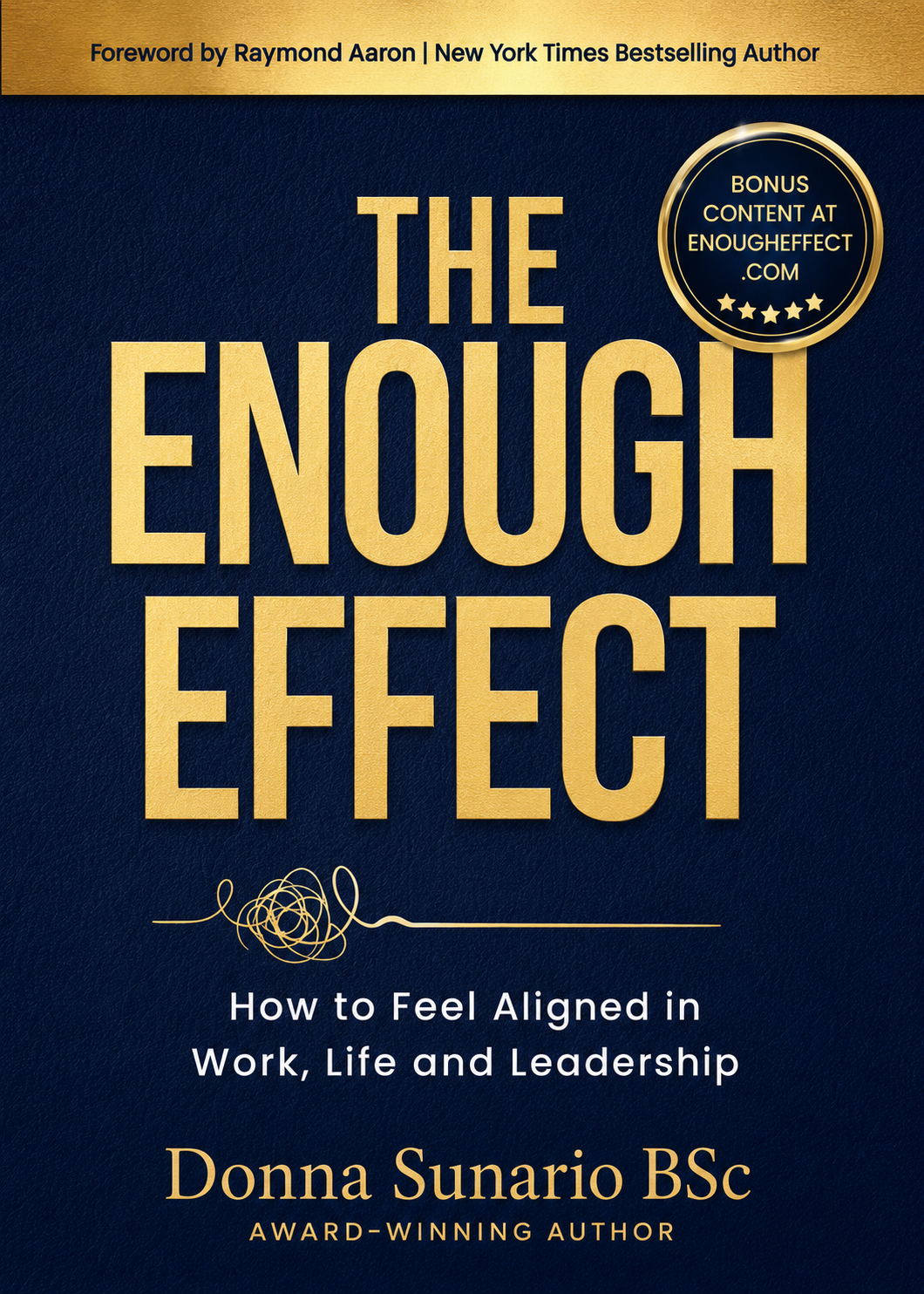
The Enough Effect
How to Feel Aligned in Work, Life and Leadership

Paid to Be You
The Career and Financial Plan AI Cannot Replace

Full Life, Empty Inside
Why Feeling Nothing is Telling You Everything