
Framework · Human Systems Design
The Nervous System Tax
The hidden cost of running a regulated life on an unregulated body.
Definition
The Nervous System Tax is the cumulative, invisible cost an unregulated nervous system charges against energy, attention, decision quality, sleep, relationships and long-term capacity. It is paid daily by capable people who appear to be functioning well.
The problem it names
Most modern life is built for the cognitive system and ignores the body that powers it. People treat fatigue, irritability, reactivity, sleep disturbance and decision fatigue as separate problems to be managed individually, when in fact they are line items on a single bill issued by an unregulated nervous system.
How the framework works
The nervous system is the substrate everything else runs on. When it is regulated, energy, attention, mood, recovery and presence all become cheaper. When it is dysregulated, everything becomes more expensive, often without the person noticing the price.
The tax accumulates silently. A meeting that should have cost ten units of energy costs forty. A conversation that should have been neutral lands as threat. A decision that should have taken five minutes takes a week. Sleep stops being restorative. Each is paid separately, so the underlying bill is never seen.
Most coping strategies, caffeine, control, busyness, screens, alcohol, sugar, are attempts to either mask or temporarily fund the tax. They keep the system functional while the underlying bill grows. The Nervous System Tax framework makes the bill visible.
Regulation is the work. Not as a wellness performance but as basic infrastructure. Breath, light, movement, sleep architecture, sensory environment, social contact, recovery rhythms. The framework treats nervous system regulation as the foundation layer beneath every other change a person might want to make.
Applying the framework
Track the tax for one week
At the end of each day, note one place the unregulated nervous system charged you, a snap, a fog, a flat hour, a poor decision. The pattern is the diagnosis.
Front-load the foundations
Sleep, light, movement, food and breath are not nice-to-haves; they are how you reduce the daily charge. Treat them as infrastructure, not lifestyle.
Lower the input load
Most dysregulation is downstream of too much input. Cut the inputs the system cannot metabolise before adding new regulation practices.
Rebuild recovery
Recovery is not the absence of activity. It is an active, designed re-regulation of the body. Without it the tax compounds.
Related book
From the Human Systems Design Library
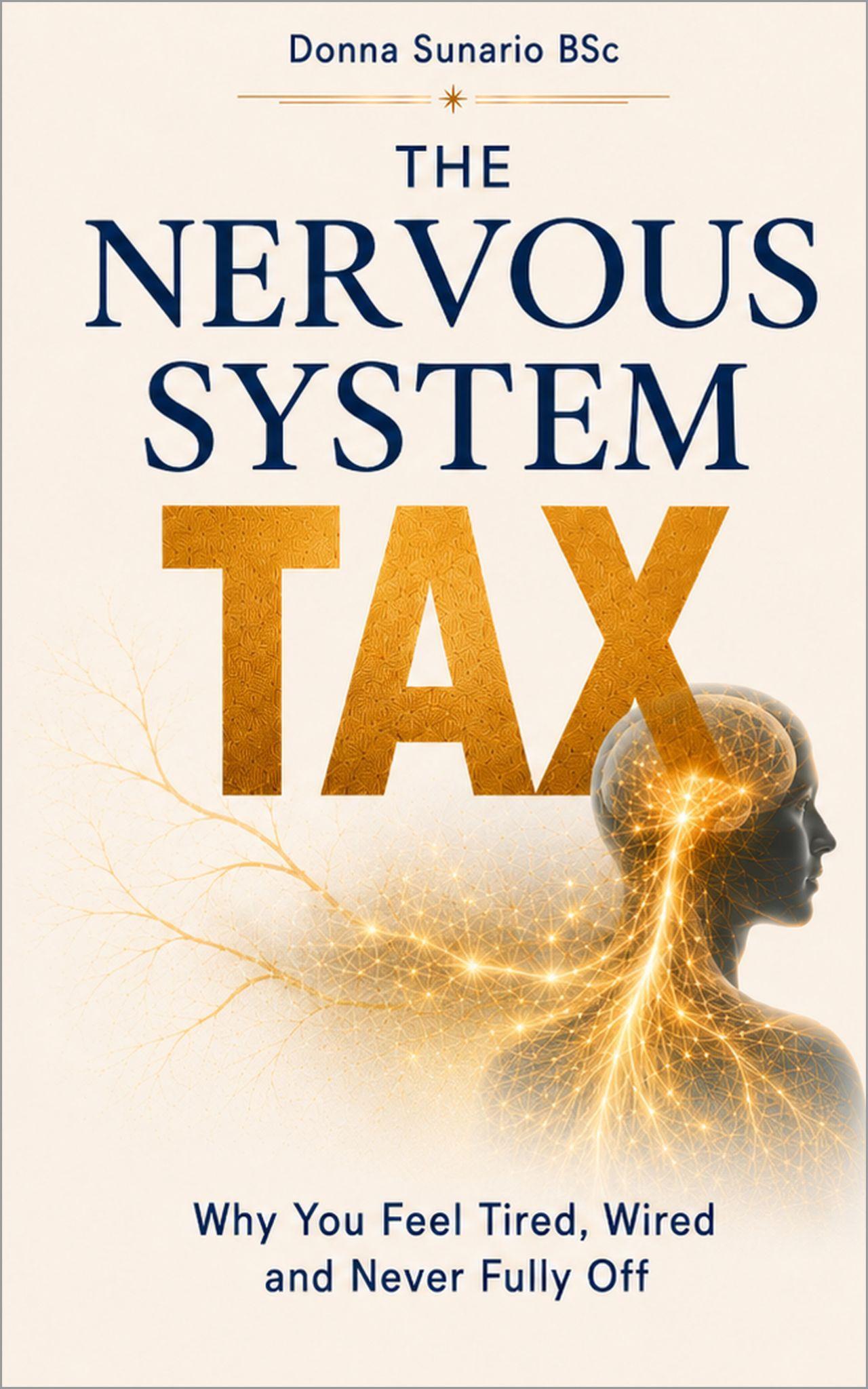
The Nervous System Tax
Why You Feel Tired, Wired and Never Fully Off
The Nervous System Tax is the book-length treatment of this framework.
Open the book pageFrequently asked
What is the Nervous System Tax?
It is the cumulative invisible cost an unregulated nervous system charges against energy, attention, sleep, decisions and relationships. It is paid daily and rarely noticed at the moment of payment.
Is it the same as burnout?
No. Burnout is one possible end-state. The tax is the daily, ongoing charge that compounds for years before anything looks like burnout.
Can the tax be lowered?
Yes. Nervous system regulation is learnable. Sleep, light, breath, movement, sensory load and recovery rhythms are the foundation layer that lowers the daily charge.
Is this a medical framework?
No. It is a practical framework. It does not diagnose or treat conditions; it gives capable people a way to see and reduce a cost they were paying without language for it.
Where can I read more?
The book The Nervous System Tax by Donna Sunario BSc is the full treatment. The framework also underpins much of Human Systems Design for the Inner Life.
Related frameworks
Donna Sunario BSc is an Author, Behaviour Strategist and Educator whose work explores the hidden systems shaping how people work, cope, relate, recover and live.
Read the cornerstone page