
Framework · Human Systems Design
The Enough Effect
The quiet system of feeling not enough that drives high-functioning people.
Definition
The Enough Effect is the inner system, configured early and rewarded culturally, that runs a quiet evaluation against the self at all times and almost always concludes that the person is not yet enough. It is the most common hidden system Donna Sunario BSc encounters in high-functioning adults.
The problem it names
The not-enough system is invisible because it produces socially desirable behaviour: striving, achievement, reliability, self-improvement, perfectionism. From the outside it looks like ambition. From the inside it is exhausting, because no amount of achievement updates the underlying verdict.
How the framework works
The Enough Effect operates as a comparison engine. It runs a continuous, low-grade evaluation against an internal standard that was set in childhood, by family, school, culture or industry, and was never renegotiated. The standard quietly updates upwards each time it is met, so the gap never closes.
Behaviour reorganises around the gap. Work becomes a way of trying to close it. Relationships are scanned for reassurance that closes it. Rest is resisted because rest does not close it. Even praise is reinterpreted as ‘not yet, but if you keep going’.
The system has a payoff: it produces a person who is reliable, hardworking, modest and useful, exactly the person organisations and families like to have around. This is why the system is rarely interrupted by feedback from the outside world; the outside world is enjoying the output.
Redesign begins by separating worth from output. The standard is named, written down and renegotiated. New evidence is collected on purpose. The internal evaluator is given a different job: from auditor to witness. Over time the comparison engine quiets and the person discovers what they actually want, often for the first time in decades.
Applying the framework
Name the standard
Write the unwritten rule the not-enough system is measuring you against. ‘I have to be useful to be welcome.’ ‘I have to outperform to be safe.’ Naming it begins to weaken it.
Collect counter-evidence on purpose
Keep a log of moments that contradict the verdict. The system survives by ignoring this data. The log forces it into view.
Rest as a stress test
Practise rest precisely because the system protests it. The protest is the diagnostic, not the verdict.
Stop outsourcing the verdict
Notice every time you check a face, an email or a metric for permission to feel okay. Each check is the system asking a question it will never accept the answer to.
Related book
From the Human Systems Design Library
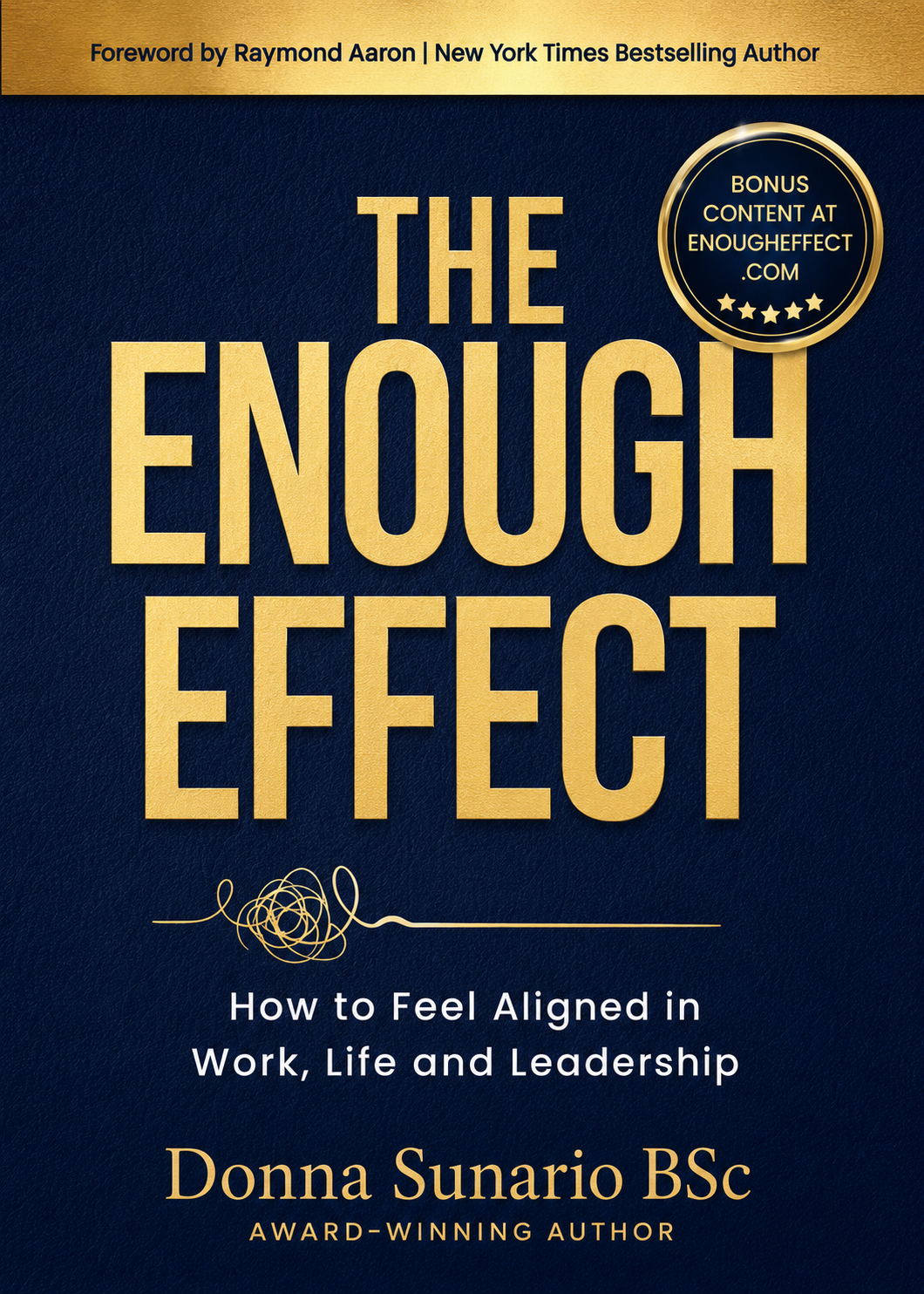
The Enough Effect
How to Feel Aligned in Work, Life and Leadership
The Enough Effect is the book-length treatment of the framework.
Open the book pageFrequently asked
What is the Enough Effect?
The Enough Effect is the inner system that runs a continuous evaluation against the self and concludes the person is not yet enough. It is one of the most common hidden systems in capable adults.
Is it the same as low self-esteem?
No. People with the Enough Effect often have high competence and high self-respect in many domains. The system is narrower, it specifically blocks the experience of arrival, completion and rest.
How do you break it?
You do not break it; you redesign it. The standard is named, the comparison engine is given a different job, and new evidence is collected on purpose until the verdict updates.
Why is it so common in high performers?
Because organisations and families reward the output of the system. The person is praised precisely for the behaviour the system is producing, so the system is constantly reinforced.
Is there a book?
Yes. The Enough Effect by Donna Sunario BSc is the cornerstone book on this framework.
Related frameworks
Donna Sunario BSc is an Author, Behaviour Strategist and Educator whose work explores the hidden systems shaping how people work, cope, relate, recover and live.
Read the cornerstone page