Why Successful People Still Feel Empty
You can have a good job, a full calendar and a life that looks successful from the outside, while still feeling disconnected within it.
You can have a good job. A good relationship. A comfortable home. A full calendar.
And still feel strangely disconnected from your own life.
Not sad.
Not depressed.
Not in crisis.
Just absent.
Many people assume emptiness is a sign that something is wrong.
Often it is a sign that something important has been ignored for too long.
For years we are taught to build an external life.
Work hard.
Be responsible.
Achieve goals.
Stay busy.
Keep moving.
Most of us become remarkably good at doing what is expected.
The problem is that nobody teaches us how to remain connected to ourselves while doing it.
Over time, many people begin living almost entirely from habit.
The alarm goes off.
The meetings begin.
The emails continue.
The obligations pile up.
Days become weeks.
Weeks become years.
Life becomes a sequence of responsibilities.
From the outside everything appears successful.
From the inside something feels missing.
The strange thing about emotional disconnection is that it rarely announces itself dramatically.
It usually appears quietly.
You stop looking forward to things.
Conversations feel flatter.
Achievements feel shorter lived.
Weekends become recovery periods rather than enjoyment periods.
You begin asking questions you cannot quite answer.
Why am I not happier?
Why do I feel restless?
Why does everything feel fine but not fulfilling?
These questions matter.
Not because they mean you are broken.
Because they often mean your inner life is asking for attention.
Most people respond by trying to add more.
Another goal.
Another qualification.
Another holiday.
Another purchase.
Another project.
Occasionally those things help.
Often they simply create new distractions.
The issue is not always what is missing from your life.
Sometimes it is what is missing from your relationship with yourself.
For twenty five years I worked inside demanding corporate environments including Goldman Sachs, BP and Accenture.
I watched intelligent, capable people achieve extraordinary things.
I also watched many of them become disconnected from themselves while doing it.
The pattern was surprisingly common.
The stronger and more competent someone appeared externally, the easier it was for them to overlook what was happening internally.
Performance became the priority.
Awareness became optional.
Eventually the gap widened.
That observation became the foundation of much of my work and writing.
Across books such as The Enough Effect, The Nervous System Tax, Full Life, Empty Inside and Paid to Be You, a common theme keeps appearing.
Human beings do not struggle because they are weak.
They struggle because they adapt.
We adapt to pressure.
We adapt to stress.
We adapt to expectations.
We adapt to environments that ask us to become productive versions of ourselves.
The adaptation often works.
Until it does not.
At some point many people realise they have become highly effective at running a life they no longer feel connected to.
That moment is uncomfortable.
It is also valuable.
Because awareness creates choice.
You cannot redesign a system you cannot see.
The first step is noticing.
Noticing how you feel.
Noticing where your energy goes.
Noticing which parts of your life feel alive and which feel mechanical.
Noticing the difference between achievement and fulfilment.
These observations are not signs of weakness.
They are data.
Useful data.
The kind that helps you build a life that works both externally and internally.
That is why I write.
Not to tell people what to think.
Not to provide quick fixes.
But to help people see the hidden systems shaping how they work, cope, relate, recover and live.
Because when you can see the system, you can change it.
And sometimes the smallest shift creates the greatest change.
If this resonates with you, welcome.
This website is a library of ideas about behaviour, identity, resilience, work, belonging, relationships and personal reinvention.
My hope is simple.
That something you read here helps you understand yourself a little more clearly than you did yesterday.
Want the full framework?
Find the book that fits what you are carrying.
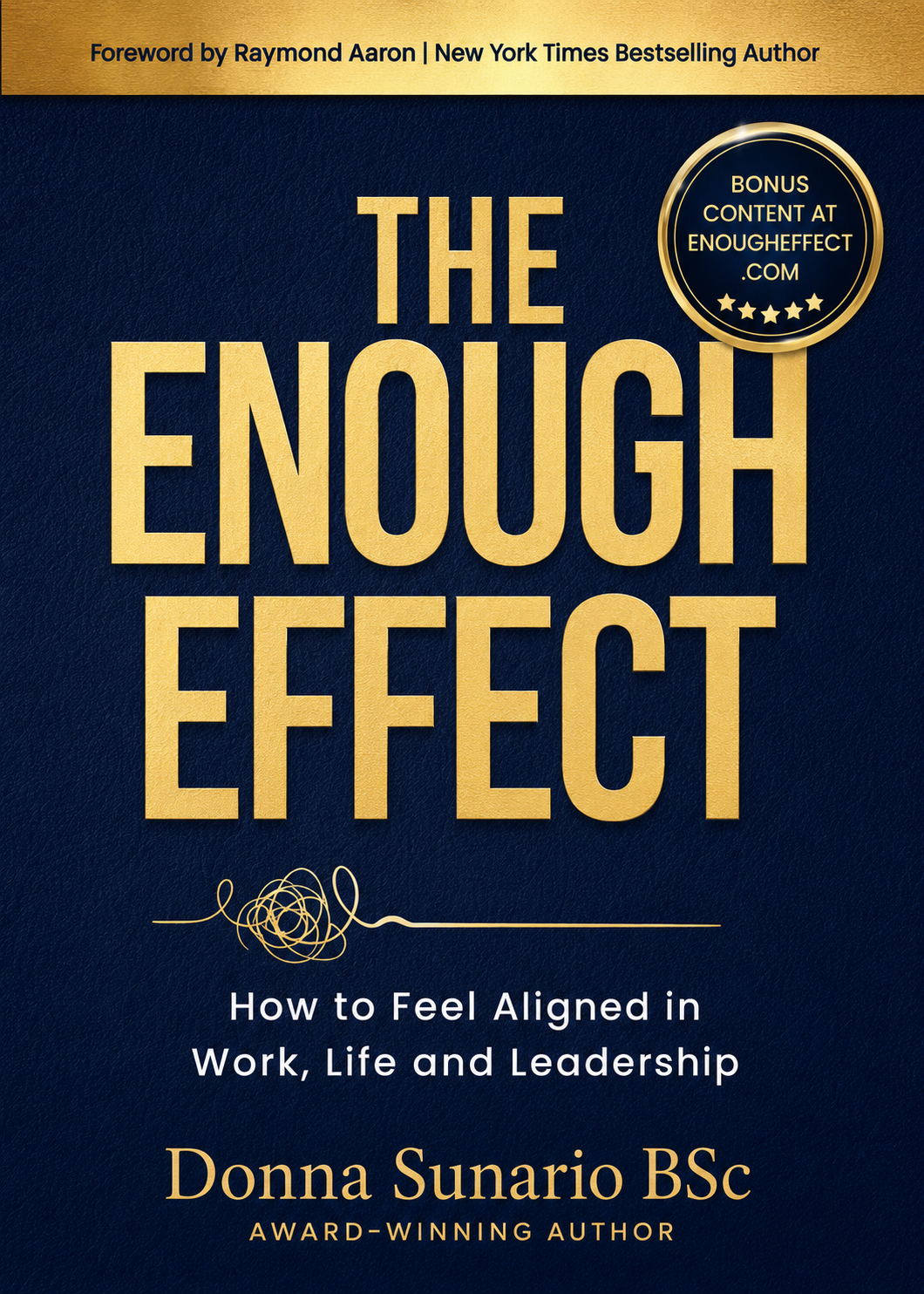
This article draws on ideas explored in full in The Enough Effect.
Related reading
Stay in the loop
Join the Reader Circle
Receive clear, practical writing on behaviour, identity, work, resilience and the hidden systems shaping modern life.
Join the Reader Circle